Projects
Designing Commercial Spaces That Build Brand Identity
November 5, 2023
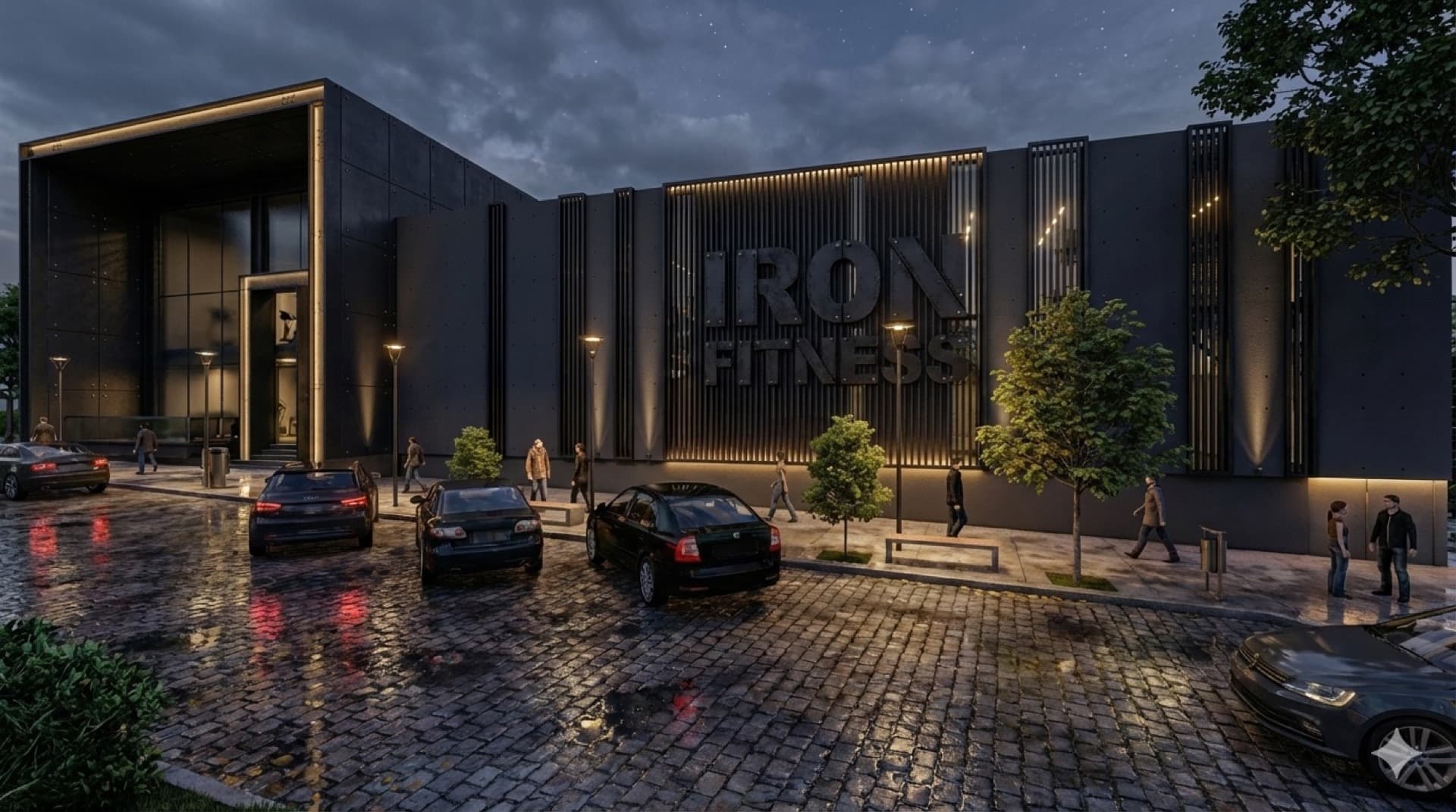
Commercial interior design operates under a fundamentally different set of constraints than residential. In a home, the client is the inhabitant. In a commercial space, the client's customer is the inhabitant — and the space must communicate the brand before anyone reads a sign.
When we designed the Iron Fitness Gym in Argentina, the brand brief was clear: industrial, uncompromising, raw. Every material decision was tested against that identity. Polished concrete floors — yes, they reinforce the industrial language. Exposed ductwork painted matte black — yes, it communicates rawness without appearing unfinished.
The mistake most commercial projects make is treating brand identity as a layer applied on top of generic architecture — logos on walls, brand colors on accent walls, themed furniture. This approach feels superficial because it is.
True brand-aligned design starts with the spatial experience. How does a customer move through the space? What do they see first? What do they touch? What do they hear? These sensory decisions communicate brand values far more effectively than any graphic element.
For retail, the critical metric is dwell time. For hospitality, it is return frequency. For fitness, it is motivation and energy. Each of these requires a different spatial strategy — and the visualization phase is where we test those strategies before committing to construction.
Our approach: we develop the brand-spatial concept first, visualize it in 3D, test it with the client, and only then move to detailed design development. The renders are not illustrations of a finished design — they are design tools.