Design Thinking
Choosing Materials That Photograph Well — And Age Better
January 12, 2024
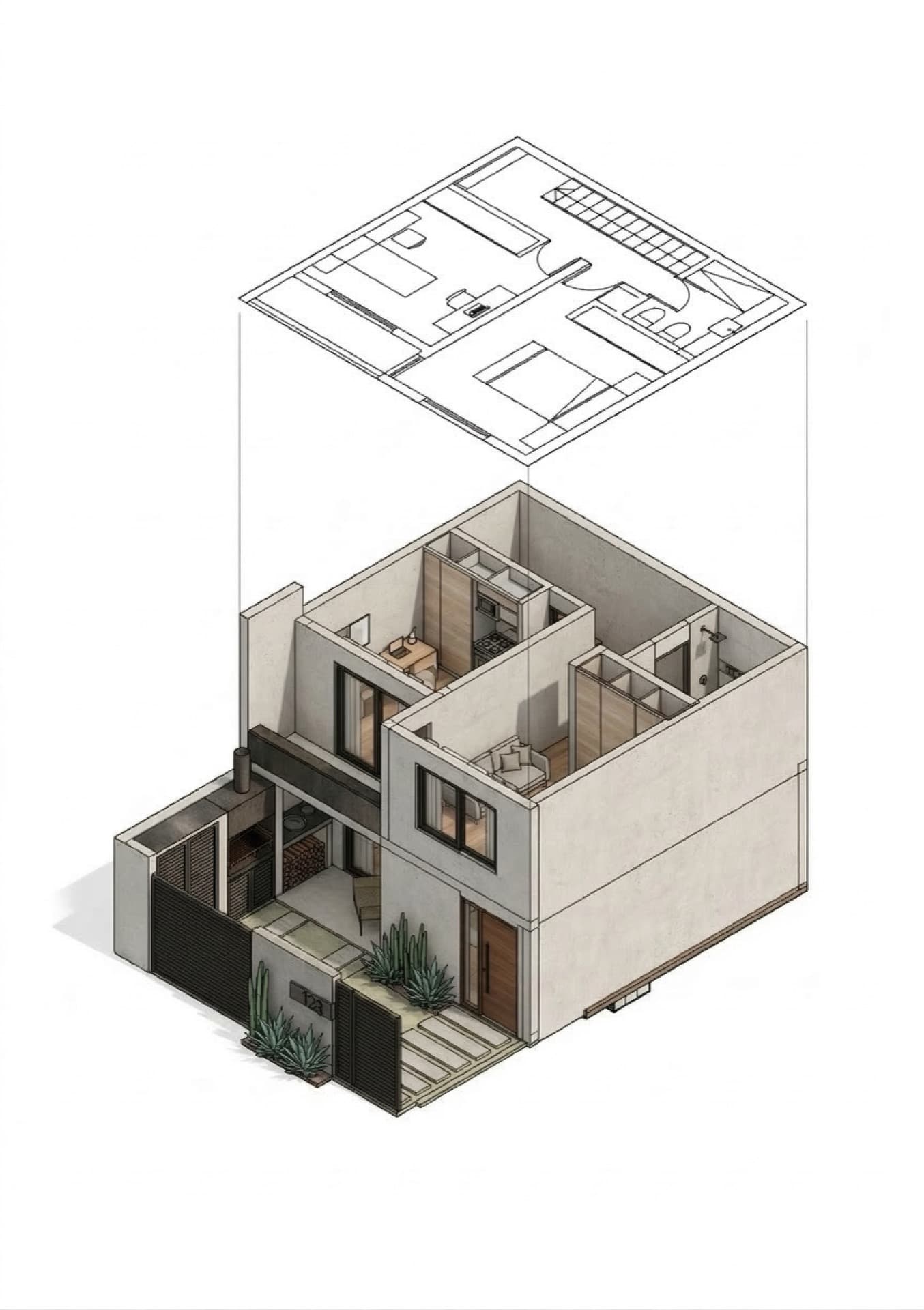
There is a direct correlation between materials that render well in 3D and materials that age gracefully in real life. Both reward texture, depth, and natural variation.
Smooth, uniform surfaces — high-gloss lacquer, flawless marble, seamless glass — are technically demanding to render because they require perfect reflections and zero imperfections. In reality, they show every fingerprint, scratch, and dust particle. They look immaculate on day one and degraded by month six.
Textured, natural materials — brushed timber, honed stone, raw linen, hand-troweled plaster — are forgiving in both contexts. In a render, they create visual richness and depth. In a built space, they develop patina. A timber floor that darkens with foot traffic becomes more beautiful, not less.
When we work on interior design projects, material selection is the decision with the longest consequences. Paint can be changed in a weekend. Furniture can be replaced in a month. But the floor, the wall surfaces, and the countertops define the space for a decade or more.
Our process: we select materials from real manufacturers, verify availability and lead times, and render them under the specific lighting conditions of the project. The client sees exactly what they are committing to — not an idealized version, but a realistic one.
The materials we specify most frequently: engineered oak in natural or fumed finishes, porcelain tile that replicates natural stone, micro-cement for walls and floors, solid brass hardware, and natural fiber textiles. Each of these renders beautifully and ages with dignity.