Process
How Renders Accelerate Permit Approvals
April 22, 2024
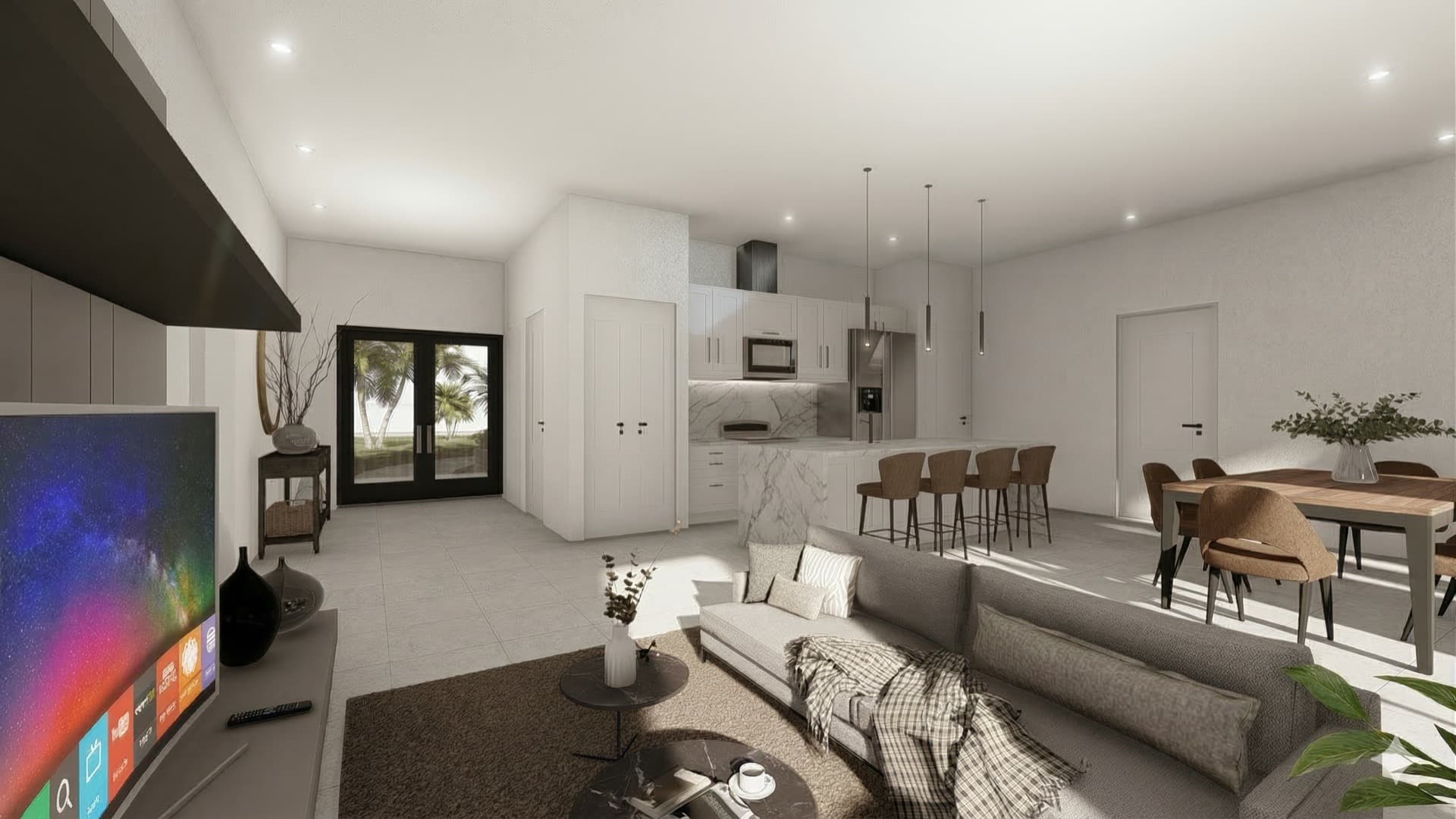
Permit applications are communication exercises. The faster a review board understands what you are proposing, the faster they approve it.
Most applications include floor plans, elevations, and site plans — technical documents that architects understand but board members often struggle to interpret. Adding photorealistic renders to the package changes the dynamic entirely.
A well-composed exterior render shows the building in its actual context — neighboring structures, street trees, the angle of afternoon light. It answers questions before they are asked: How tall is it relative to the house next door? Does it block the neighbor's view? How does the material palette fit the neighborhood?
For interior work, renders demonstrate that the proposed layout meets code requirements for natural light, egress, and accessibility — not through abstract measurements, but through visible, intuitive images.
We have worked on projects in Miami-Dade County, Buenos Aires province, and several Argentine municipalities. In every case, the feedback from the permitting office was the same: the renders made the application clearer and easier to evaluate.
The practical advice: include at least two exterior views (street-level and aerial context) and one interior view of the primary living space. Use realistic materials, not conceptual sketches. Show the project in daylight, not dramatic nighttime lighting. The goal is clarity, not spectacle.